


Tooth loss affects people for many reasons — injury, decay, periodontal disease, or simply aging — and the consequences go beyond appearance. Missing teeth can change how you chew, alter speech, and allow neighboring teeth to drift, which may create bite problems over time. Modern implant therapy addresses these issues by restoring both the visible tooth and the part you cannot see: the root. That dual function is what makes implants a durable and functionally complete option for rebuilding a confident smile.
Implants are engineered to integrate with your jawbone and act as a stable foundation for replacement teeth. Because they mimic the natural architecture of a tooth, implants help preserve the supporting bone and maintain facial contours that can otherwise collapse after tooth loss. For many patients, that combination of strength, longevity, and natural appearance is what sets implants apart from more traditional solutions.

At Skylark Dental, we prioritize treatment plans that restore long-term oral health as well as aesthetics. Implant restorations are tailored to each patient’s health history, oral condition, and personal goals so the final result is comfortable, reliable, and appropriate for daily life. Many patients find implants transform not only their smiles but also their ability to eat and speak with ease.
Dental implants are small, biocompatible posts — most commonly made from titanium or titanium alloys — designed to be placed into the jawbone where a tooth is missing. Over time, the bone fuses to the implant in a process called osseointegration. This creates a secure anchor that supports a prosthetic tooth or set of teeth, allowing them to perform like natural teeth when chewing, speaking, or smiling.
Because implants replace the root portion of a tooth as well as the visible crown, they provide support that helps maintain the health of surrounding bone and soft tissues. That support reduces the risk of the bone loss and facial changes that often follow tooth extraction, preserving both oral function and facial structure over the long term.
Implant restorations are matched to natural tooth color, shape, and alignment so the result feels integrated with your smile. Options include single crowns, fixed bridges, and full-arch restorations — each crafted to balance durability, aesthetics, and comfort for the individual patient.
The implant journey begins with a thorough evaluation of your oral and overall health, including images and measurements to determine bone volume and the best implant position. From there we develop a personalized plan that outlines the sequence of treatment — from any preparatory work, like extractions or bone grafting, through implant placement and final restoration.
Placement is typically performed as a minor outpatient surgical procedure under local anesthesia, with sedation options available if needed for comfort. After the implant is placed, a healing period allows the bone to integrate with the implant; once stable, a precisely fitted crown, bridge, or denture is attached. Each case follows a timeline customized to the patient’s needs and biological response to treatment.
One of the primary advantages of implants is their ability to restore function without relying on adjacent teeth for support. Unlike traditional bridges that require the alteration of neighboring healthy teeth, implants are independent restorations. That preserves more of your natural tooth structure and reduces long-term stress on surrounding teeth.
For patients who have worn removable dentures, implants can offer a dramatic improvement in comfort and confidence. Implant-retained or implant-supported solutions eliminate many of the common problems associated with dentures, such as slipping, sore spots, or the need for adhesives. They restore more chewing efficiency and allow a wider variety of foods to be enjoyed comfortably.
Long-term stability is another distinguishing feature: with appropriate hygiene and routine dental care, implants can remain a reliable part of your mouth for many years. They do not develop cavities like a natural tooth, but they do require careful cleaning and monitoring to maintain the health of surrounding soft tissues and bone.
When considering tooth replacement, it’s helpful to think about both immediate needs and the way a chosen solution will affect your oral health a decade from now. For many patients, implants strike an ideal balance between biological compatibility, functional performance, and cosmetic integration.
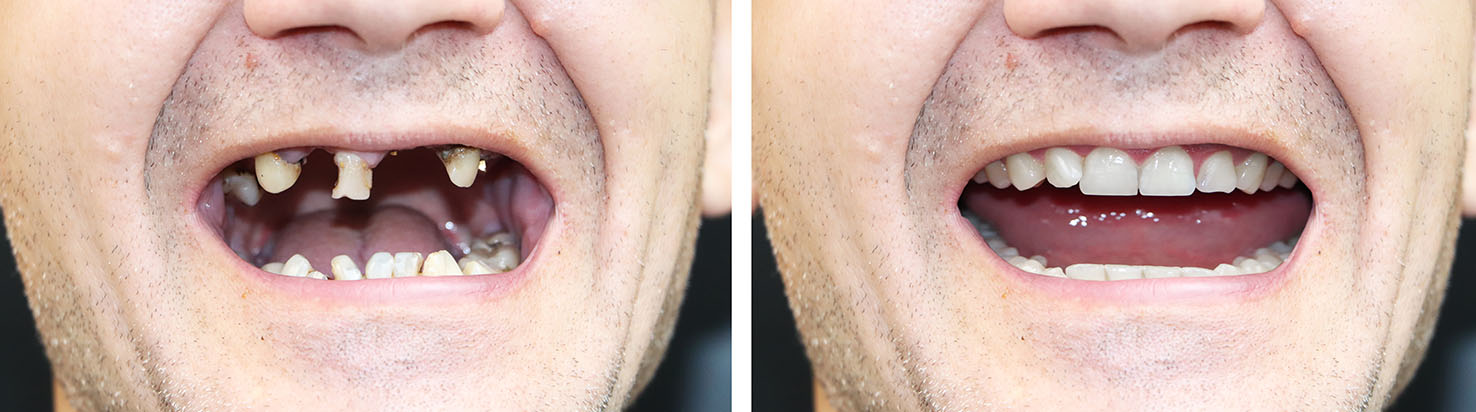
When only one tooth is missing, a single implant topped with a custom crown is an effective way to recreate a natural-looking tooth without changing the neighboring teeth. This approach restores chewing ability and blends with surrounding teeth to maintain a consistent smile line.
For gaps involving two or more adjacent teeth, an implant-supported bridge can replace all the missing teeth while avoiding the need to grind down healthy teeth for conventional bridgework. Strategically placed implants bear the load and help maintain bone in the area, preserving facial contours and oral function.
Full-arch solutions, often using four to six implants, allow a complete upper or lower dental arch to be restored with a permanent prosthesis. This option is designed to provide near-natural chewing ability and a fixed, non-removable restoration for patients who want a stable alternative to traditional dentures.
For patients who prefer a removable solution, implant-retained dentures attach securely to a small number of implants. These prostheses combine the stability and retention of implant support with the convenience of a removable appliance for cleaning and maintenance.
Candidacy for implants depends on several factors, including general health, oral hygiene habits, and the quality and quantity of available jawbone. Many patients who once thought implants were out of reach are eligible today thanks to advances in imaging, surgical techniques, and bone-grafting procedures that rebuild lost support when necessary.
During the initial consultation we review medical history, dental records, and imaging to determine the best pathway. If any preparatory treatments are needed — such as treating periodontal disease or placing a bone graft — they are planned into the overall timeline so the implant has the best chance to succeed long-term.
Healthy bone is essential for implant stability. When bone has resorbed after a tooth extraction or due to periodontal disease, grafting can restore the volume and density needed to anchor an implant securely. Grafting materials and techniques vary, and our team will recommend the approach that best matches your anatomy and treatment goals.
After restoration, maintaining implant health involves the same fundamentals as caring for natural teeth: regular professional cleanings, consistent at-home oral hygiene, and periodic monitoring. Routine exams allow the team to track bone levels and soft tissue health and address any concerns before they compromise the restoration.
Implant dentistry combines careful planning, precise surgical placement, and high-quality prosthetic design to deliver outcomes that look natural and function dependably. With an emphasis on individualized care and long-term maintenance, implant treatment is a conservative and forward-looking way to rebuild a smile that supports overall oral health.
Dental implants offer a durable, natural-feeling approach to replacing missing teeth — restoring chewing function, preserving bone, and helping maintain facial structure. The process is planned around each patient’s health and goals, and restorative options range from single crowns to full-arch solutions. At Skylark Dental, we focus on creating treatment plans that prioritize long-term stability and patient comfort.
Please contact us for more information about implant dentistry and to discuss whether implants are a suitable option for your smile.
Dental implants are small, biocompatible posts—commonly made from titanium—that are surgically placed into the jawbone where a tooth is missing. Over time the surrounding bone fuses to the implant in a process called osseointegration, creating a stable anchor for a replacement tooth. This foundation restores the root function that supports chewing, speech, and facial contours.
A prosthetic crown, bridge, or full-arch restoration is then attached to the implant to recreate the visible portion of the tooth. Because implants mimic both root and crown they help preserve bone and prevent neighboring teeth from drifting. With appropriate planning and care, implant restorations provide predictable function and a natural appearance.
Candidacy for implants depends on overall health, oral hygiene, and the quality and quantity of jawbone available at the site of the missing tooth. Many patients who once thought they were ineligible can now receive implants because of advances in imaging and bone-grafting techniques. Chronic conditions such as uncontrolled diabetes, heavy smoking, or active periodontal disease require evaluation and stabilization before implant placement.
During the consultation we review medical history, perform imaging and dental examinations, and plan any preparatory procedures that may be necessary. Preparatory work can include periodontal therapy, tooth extraction, or bone grafting to create a stable foundation for the implant. At the Belton, MO office of Skylark Dental we tailor the treatment pathway to each patient’s health and goals to maximize long-term success.
Implant restorations range from single-tooth crowns to implant-supported bridges, full-arch fixed prostheses, and implant-retained removable dentures. Single crowns replace an individual tooth, while implant-supported bridges can span gaps without altering adjacent healthy teeth. Full-arch options use a small number of implants to support a permanent prosthesis for patients needing complete upper or lower reconstruction.
Implant-retained removable prostheses offer enhanced stability compared with conventional dentures while allowing removal for cleaning. Each restoration is customized for tooth color, shape, and occlusion to integrate with your smile and bite. Your dentist will recommend the restoration type that best balances durability, function, and aesthetic priorities.
The implant process begins with a comprehensive evaluation and imaging to assess bone anatomy and plan implant position. Treatment planning may include preparatory procedures such as extractions or grafting when needed to optimize outcomes. Implant placement is typically performed as an outpatient procedure under local anesthesia, and sedation options are available for patient comfort.
After placement the implant undergoes a healing period during which osseointegration occurs; this can take several weeks to a few months depending on individual factors. Once the implant is stable a precisely fitted crown, bridge, or denture is attached to restore function and aesthetics. The overall timeline is personalized and your care team will outline each phase so you know what to expect.
Bone grafting is recommended when the jawbone lacks sufficient volume or density to support an implant. Grafting materials and techniques vary and can include autografts, allografts, xenografts, and synthetic options depending on the clinical situation. A sinus lift is a specific grafting procedure used in the upper back jaw to create adequate bone height for implant placement.
Grafting increases the predictability of implant integration but adds healing time to the treatment plan and requires careful monitoring. Many grafting procedures are routine and predictable when performed by an experienced surgical team. Your dentist will explain whether grafting is recommended and how it affects the sequence and timing of care.
Unlike bridges that rely on adjacent teeth for support, implants replace the tooth root and act independently, preserving neighboring tooth structure. Traditional removable dentures rest on soft tissues and can move or require adhesives, while implant-supported solutions improve retention and chewing efficiency. Restoring the root also helps maintain jawbone volume and facial contours that can decline after tooth loss.
Implants require dedicated oral hygiene and periodic professional maintenance to monitor bone and soft tissue health. Conversely, fixed bridges can create long-term stress on supporting teeth if those teeth are otherwise healthy. When choosing a solution it is important to weigh immediate needs, functional expectations, and how the option will affect oral health over time.
Implant surgery is generally performed in the dental office as a minor surgical procedure using local anesthesia and, if requested, sedation to ensure comfort. Patients commonly experience some swelling and mild discomfort for a few days that is managed with prescribed or over-the-counter medications and cold packs. Strict adherence to post-operative instructions for oral hygiene and diet helps reduce complications and supports healing.
Follow-up appointments are scheduled to monitor healing and determine when the implant has sufficiently integrated to support the final restoration. Sutures, if used, are typically removed or dissolve within one to two weeks, and any temporary prosthesis will be adjusted as needed. Recovery timelines differ by individual and by whether additional procedures such as grafting were performed.
Caring for implants follows many of the same principles as caring for natural teeth: thorough daily brushing, interdental cleaning, and regular professional examinations. Specialized brushes and interdental cleaners may be recommended to remove plaque around implant restorations and beneath prosthetic components. Good home care reduces the risk of peri-implant inflammation and helps preserve supporting bone.
Routine dental visits allow your team to assess tissue health, check occlusion, and perform professional cleanings that protect the restoration. Patients should also report any new pain, looseness, or persistent swelling so issues can be addressed promptly. Maintaining overall health, including controlling systemic conditions, supports long-term implant stability.
Dental implants are considered a safe and effective treatment with high success rates when placed and maintained appropriately. Potential complications can include infection, failure of osseointegration, damage to adjacent structures, and sinus or nerve involvement in rare cases. Thorough planning, imaging, and following post-operative protocols help minimize these risks.
Long-term success also depends on patient factors such as smoking, uncontrolled systemic disease, and oral hygiene habits. If complications occur early detection and prompt management improve the likelihood of a favorable outcome. Your dental team will review potential risks and the steps taken to reduce them during the consultation.
Selecting the right implant solution begins with a comprehensive assessment of your oral condition, functional needs, and aesthetic goals. Digital imaging and careful measurements help determine implant number, size, and optimal placement for predictable results. The restorative plan balances durability, ease of maintenance, and a natural appearance tailored to the individual.
At Skylark Dental our team combines surgical planning and prosthetic design to create individualized treatment plans and provide ongoing follow-up care. We coordinate preparatory therapies, surgical placement, and final restoration to maintain both function and facial structure. If you are considering implants, schedule a consultation so the team can explain options and develop a plan that fits your oral health needs.
Quick Links
