


Advances in dental materials and laboratory techniques have made modern dentures more natural-looking and comfortable than ever. While fixed solutions such as dental implants and traditional bridgework are excellent options for many people, removable dentures remain a reliable and versatile way to restore a complete, functional smile.
Our practice combines careful clinical evaluation with contemporary fabrication methods to create dentures that fit well, support facial contours, and help patients speak and eat with confidence. Whether you need a partial replacement or a full set of upper or lower teeth, we tailor solutions to each person's needs, preferences, and oral health.
Losing one or more teeth affects much more than appearance. Gaps in the dental arch can change how the jaw functions, alter chewing patterns, and increase stress on remaining teeth. Over time, these changes may contribute to uneven wear, shifting of adjacent teeth, and bite problems that make everyday tasks like chewing and speaking more difficult.
Tooth loss can also have important effects on facial structure. Without the support of teeth, the jawbone and soft tissues can undergo gradual remodeling, which sometimes leads to a sunken or aged appearance. Restoring teeth with a thoughtfully designed denture helps re-establish support for the lips and cheeks and preserves a more youthful facial profile.
Beyond physical effects, missing teeth can influence confidence and social interaction. Many people become self-conscious about their smile and avoid social situations or speaking up in public. A well-made denture addresses these concerns by restoring both function and comfort, allowing patients to re-engage with daily life more easily.

Dentures are removable prosthetic appliances that replace missing teeth with artificial teeth set into a base that rests on the gums. The base is shaped to follow the contours of the oral tissues so the denture can sit securely while you speak and chew. Proper planning and precise impressions are essential for a comfortable fit and stable function.
One of the practical advantages of removable dentures is that they can be taken out for cleaning and for giving the gums a rest. This design makes it easier to maintain oral hygiene of any remaining natural teeth and the supporting tissues. For many patients, the ability to remove the appliance nightly is an important part of long-term oral health.
Dentures are adaptable: they can replace a few missing teeth when anchored by remaining teeth, or they can rebuild an entire upper or lower arch when all teeth are absent. Modern denture teeth come in a variety of shades and shapes so the prosthesis can be crafted to look natural and harmonize with the patient's facial features.
Selecting the most suitable denture begins with a comprehensive oral examination and discussion about daily habits and goals. When most or all teeth in an arch are missing, a complete denture can restore function and appearance. If some healthy teeth remain, a partial denture can fill gaps and help preserve the position of adjacent teeth to prevent unwanted drifting.
Complete dentures come in several forms. A conventional complete denture is made after natural teeth are removed and tissues have healed, offering a precise fit once healing is complete. An immediate denture is placed at the time of extractions so the patient does not go without teeth during healing; it is a transitional solution that may need subsequent adjustment or reline as tissues remodel.
Overdentures and implant-supported dentures represent a middle ground between removable and fixed options. Overdentures receive additional retention from the roots of remaining teeth or specialized attachments, while implant-supported dentures attach to dental implants and provide markedly improved stability and chewing efficiency compared with conventional removable dentures.
When a conventional complete denture is appropriate, the process typically waits until extraction sites have healed so the base can be made to closely match the final tissue contours. This approach often produces the most predictable fit and comfort. For patients who prefer not to be without teeth during healing, immediate dentures are an alternative, but they commonly require follow-up visits to refine fit as the mouth changes.
Immediate dentures offer the benefit of continuous tooth replacement but can require relining or remaking after tissues settle. Implant-enhanced designs—whether overdentures that snap to attachments or fixed hybrid bridges—use implants as anchors, improving retention and reducing movement. For many people, implant support makes eating and speaking more secure and comfortable.
Partial dentures are built to clasp or attach to remaining teeth, restoring missing teeth while supporting proper bite relationships. Frameworks can be cast metal for strength, made from flexible resins for improved comfort, or constructed from hybrid materials that balance rigidity and aesthetics. Material selection and careful design influence durability, comfort, and how the prosthesis blends with natural dentition.
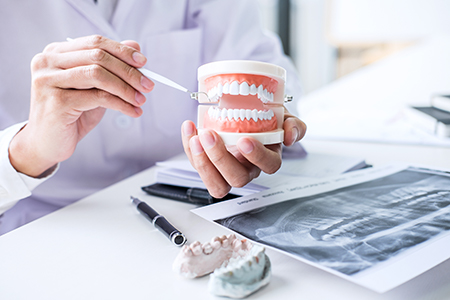
Creating a denture that looks good and functions well is both technical and artistic. It requires accurate impressions, thoughtful tooth selection, and precise bite relationships. Our team uses digital and laboratory resources together with clinical expertise to plan a prosthesis that satisfies aesthetic goals while protecting oral health.
Before fabrication begins, we review medical and dental history, assess the condition of any remaining teeth, and evaluate the gum and bone anatomy. If extractions, tissue reshaping, or other preparatory procedures are needed to create a stable foundation, those steps are scheduled and coordinated so the final denture will seat properly and remain comfortable.
Skylark Dental emphasizes clear communication throughout treatment. We walk patients through each phase—impressions, try-ins, shade and tooth selection, and final placement—so expectations are set and adjustments can be made promptly. This collaborative approach helps achieve a result that supports long-term comfort and function.

Adjustment is a normal part of transitioning to new removable teeth. It can take several days or a few weeks to regain full ease with speech and chewing. During that time, minor sore spots or increased saliva production are common and generally improve as the mouth adapts. Returning to the office for adjustments when needed helps resolve pressure points and improves comfort.
Eating with a new denture is best approached gradually—start with soft, well-cut foods and chew on both sides to distribute pressure evenly. Practice speaking aloud to accelerate adaptation; reading short passages can help re-train the lips and tongue to work with the prosthesis. With patience and a few simple exercises, most patients regain comfortable function quickly.
Cleaning and maintenance are essential to long-term success. Remove and rinse the denture after meals, brush it daily with a denture brush and recommended cleanser, and soak it overnight in water or a non-abrasive soak solution. Take care of any remaining natural teeth and soft tissues with regular brushing and routine oral examinations to monitor oral health and the fit of the prosthesis.
As the supporting tissues change over time, relines or adjustments may be necessary to restore fit and stability. Regular follow-up visits allow the dental team to evaluate fit, check the condition of the denture, and recommend relining, rebasing, or replacement when appropriate to maintain comfort and function.
In summary, dentures are a flexible and effective way to replace missing teeth and restore confidence, function, and facial support. If you have questions about whether a partial, complete, or implant-assisted denture is the right choice for your situation, please contact us to learn more and schedule a consultation.
Dentures are removable prosthetic appliances that replace missing teeth with artificial teeth set into a gum-colored base. The base is shaped to follow the contours of the oral tissues so the prosthesis can sit securely during eating and speaking. Proper impressions and bite records are essential to create a comfortable, stable fit.
Modern denture teeth come in a variety of shapes and shades so the final result can harmonize with facial features and remaining teeth. Many designs allow patients to remove the denture for cleaning and to give the gums a rest, which supports long-term oral health. With careful planning and timely adjustments, dentures can restore function and confidence for patients missing one or more teeth.
Dentures include complete (full) dentures, partial dentures, immediate dentures, and overdentures that gain support from roots or implants. Complete dentures replace all teeth in an arch, while partial dentures fill gaps when some natural teeth remain and often use clasps or precision attachments. Immediate dentures are placed at the time of extraction and serve as a transitional restoration until tissues heal.
Material options range from traditional acrylic bases and cast-metal frameworks to flexible resin materials and hybrid constructions that balance strength and aesthetics. Choice of material influences durability, comfort, and how well the prosthesis blends with natural dentition. The dental team will recommend the best option based on oral anatomy, patient preferences, and functional needs.
Implant-supported dentures attach to dental implants or specialized attachments to provide greater retention and stability than conventional removable dentures. This anchorage reduces movement during chewing and speech, improving comfort and biting efficiency for many patients. Achieving implant support requires sufficient bone and a minor surgical procedure to place the implants.
Conventional dentures rely on tissue support, suction, and precise fit for stability and may become less secure as jawbone contours change over time. Overdentures that use remaining roots or attachments can offer intermediate stability without a fully fixed restoration. The choice between implant-supported and conventional designs depends on health, bone condition, and the patient’s functional goals.
Good candidates for dentures include patients who have lost several teeth or an entire dental arch and who require restoration of chewing function and facial support. The treatment team assesses oral health, the condition of remaining teeth, gum and bone anatomy, and any medical factors that could influence healing. Some patients may be better served with implant-assisted options if they have adequate bone and desire increased stability.
Patients with uncontrolled systemic conditions or certain medications may need medical clearance or tailored treatment planning to proceed safely. The practice evaluates alternatives such as bridges or implants and discusses the benefits and limitations of each approach during a comprehensive consultation. Ultimately, candidacy is determined by clinical findings and the patient’s lifestyle and goals.
The denture process begins with a comprehensive exam, medical and dental history review, and diagnostic records including digital or conventional impressions. From those records, the team establishes occlusion, tooth position, and a treatment sequence that may include extractions, tissue modification, or preparatory care to create a stable foundation. Accurate communication about appearance, function, and daily habits guides tooth selection and the laboratory prescription.
Fabrication typically involves try-in appointments to verify fit, esthetics, and bite before the final prosthesis is processed and delivered. Immediate dentures are inserted at the time of extraction when appropriate, but they commonly require relining or adjustment as healing progresses. Follow-up visits are important to manage sore spots and to refine fit for long-term comfort.
Daily cleaning of the denture is essential: remove and rinse the appliance after eating, brush it with a denture brush and nonabrasive cleanser, and soak it overnight as recommended. Avoid hot water that can warp acrylic and do not use household abrasives that can scratch denture surfaces. Caring for any remaining natural teeth and soft tissues with regular brushing and flossing helps prevent decay and gum disease.
Regular dental checkups allow the team to assess fit, evaluate tissue changes, and recommend relines, repairs, or replacement when needed. If a denture becomes loose, causes persistent soreness, or shows signs of damage, patients should return to the office promptly rather than attempting at-home repairs. Proper maintenance and timely professional care help extend the functional life of the prosthesis and preserve oral health.
The lifespan of a denture varies with material, oral anatomy, and how well it is maintained; many prostheses provide comfortable service for several years but require periodic relines or adjustments. Bone and soft tissues change over time, which can alter the fit and function of even a well-made denture. Routine evaluations let the dental team compare the fit to current tissue contours and recommend corrective procedures when appropriate.
When wear, fracture, persistent instability, or recurrent sore spots occur, relining, rebasing, or fabrication of a new denture may be indicated to restore function. Implant-supported options can reduce the frequency of severe fit changes by preserving bone and improving retention for some patients. Open discussion with the dental team about expected maintenance helps patients plan for long-term oral care.
It is common to experience changes in speech and eating when first adapting to dentures, and most patients regain fluency and comfort with practice over several weeks. Starting with soft foods cut into small pieces and chewing on both sides helps distribute pressure evenly and accelerates adaptation. Reading aloud, practicing specific words, and speaking slowly during the first days can help retrain tongue and lip movements.
Adjustments by the dental team are often needed to eliminate pressure spots that interfere with comfortable function or clear speech. If problems persist, alternative designs or implant assistance can improve stability and reduce movement that causes slurred or whistled sounds. Patience and structured practice, combined with professional follow-up, usually lead to satisfactory long-term results.
Common issues with dentures include sore spots, looseness, stained or worn teeth, and occasional fractures or component failures. These problems are often managed with in-office adjustments, relines, professional cleaning, or laboratory repairs depending on the nature of the issue. Maintaining good hygiene, avoiding abrupt temperature changes, and storing the prosthesis properly reduce the likelihood of damage and odor.
Oral health conditions such as fungal infections or inflamed soft tissues can develop under a poorly fitting denture and should be evaluated promptly by the dental team. Regular examinations allow early detection of tissue changes and help prevent complications that compromise comfort and function. If recurring problems arise, the team can explore alternative designs or implant-assisted solutions to improve outcomes.
Achieving a natural appearance and secure fit requires coordinated work between the clinician and the dental laboratory, beginning with precise impressions and accurate bite records. Tooth selection considers shade, size, and alignment to harmonize with facial features and remaining dentition, and try-in appointments allow patients and clinicians to refine esthetics before final processing. Digital tools and well-established laboratory techniques both contribute to predictable, lifelike results.
At Skylark Dental, the team emphasizes clear communication throughout treatment and schedules timely follow-up visits to monitor fit and function after delivery. When necessary, minor adjustments, relines, and occlusal refinements are performed to maintain comfort and chewing efficiency. This collaborative, stepwise approach helps ensure the final prosthesis supports long-term oral health and patient confidence.
Quick Links
